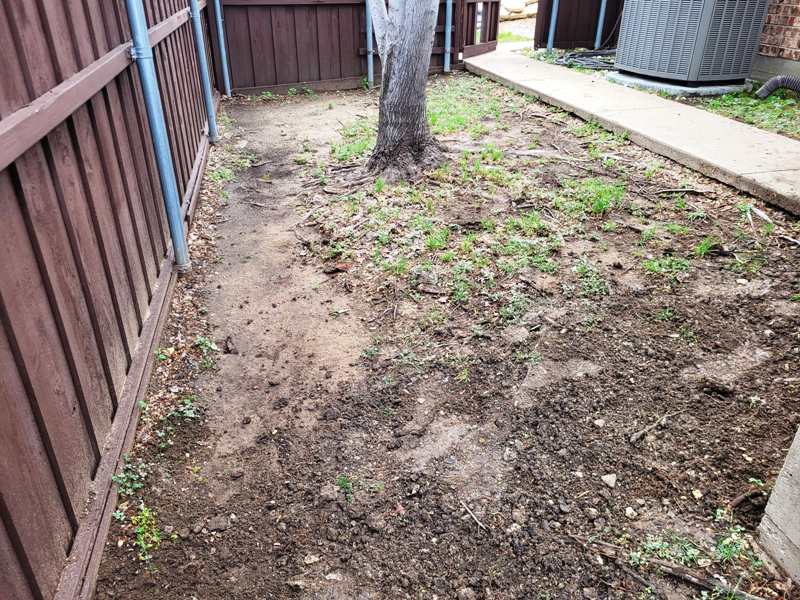
Understanding the way water moves on your property is essential for protecting your home as well as properly maintaining your land. If you find that water moves slowly or sits for too long in one area of your yard, then you have a drainage problem. If you see erosion in your yard, it’s time to make a call and have the drainage issue fixed, even if it’s minor. Identifying the cause of the problem right away may allow you to correct the yard drainage issue before it becomes a more costly repair. We have outlined the 7 most common causes of yard drainage problems in North Dallas below.
Table of Contents
Changes in Grading
Adding new plant beds, a retaining wall, or a swimming pool can negatively affect yard grading if not carefully planned. Unintended changes to the grading can move stormwater to unwanted areas and result in drainage problems.
Negative Grading
When a home is built, the yard is supposed to be properly graded so that water moves away from the property. Negative grading is when an improperly graded yard moves water towards the property and structures. This negative grading can be caused by several things, like pipe leaks, flooding, and erosion, to name a few.
Poor Draining Soils
Clay soil has poor draining qualities because it struggles to let water drain down through it. Clay soil quickly fills with water, bringing it to the surface, creating yard drainage problems. The pooling surface water can create low or weak spots in the lawn, giving water a place to gather and flow in a negative direction.
Leaky Pipes
A broken or leaking pipe underground can be the cause of drainage issues if left unchecked. The nearby soil will sink and change the yard grading. Unwanted water will pool in areas of the lawn compromised by a leaky water pipe and cause soil erosion. The grass may perish in those areas and create muddy spots in the lawn.
Failed Drainage System
Drainage systems require maintenance to function properly. When drainage systems fail, stormwater and excess irrigation water are unable to flow away from the property. A clogged drainage pipe may cause yard flooding, and if the unwanted water works its way back up the drainpipe toward the house, foundation damage can occur.
Unburied Gutter Downspouts
Most new homes are constructed with gutters connected to downspouts that dump water next to the home’s foundation. Many Texas homeowners can fix their muddy side yards by simply extending the downspouts. If the downspouts are not buried and extended to move water away from the house, severe erosion will occur, and moisture can go under the foundation, causing it to shift or fall.
Overflowing Gutters
When leaves and twigs accumulate in roof gutters, stormwater can fill the gutters quickly and spill over on the lawn next to the house. The overflowing water can erode the soil and find its way under the home, causing foundation failure and drainage issues.